What drives costs and what you should evaluate
The biggest cost drivers typically include how many users are covered, the training format (self-paced modules versus interactive sessions), and whether phishing simulations are included. You should also look security awareness training pricing at the reporting depth, since mature programs provide role-based insights and measurable outcomes rather than generic completion rates. Finally, ask whether content updates and ongoing support are included, because stale materials can reduce engagement and effectiveness.
When evaluating security awareness training companies, separate “training delivery” from “security outcomes.” A lower entry price can hide extra fees for admin seats, recurring content refreshes, or separate phishing tools. Consider how the vendor handles onboarding, language coverage, and exemptions for high-risk roles, because these details affect both cost and adoption. For MSP environments, multi-tenant management is another practical factor that can reduce operational overhead and prevent configuration drift across client accounts.
Benefits that justify spend for MSPs and their clients
A benefits-led approach starts with the problem you’re solving: reducing human-caused risk, improving resilience, and creating evidence for audits. Security awareness programs can lower the likelihood of successful phishing by training users to recognize social engineering patterns and report suspicious activity. Over security awareness training companies time, organizations often see improved incident response because employees become more confident about what to do when something looks wrong. That behavioral change is where budget typically becomes defensible, not just where training content exists.
For MSPs, the value extends beyond the end customer. A scalable program helps you standardize security deliverables across many clients, which makes it easier to meet contractual obligations and reduce service variability. White label delivery can strengthen your client relationships by presenting the training as part of your managed security services. When solutions also provide streamlined multi-client administration, you save time on repetitive setup work and can focus on client communication and risk strategy.
Pricing models and packaging options that reduce surprises
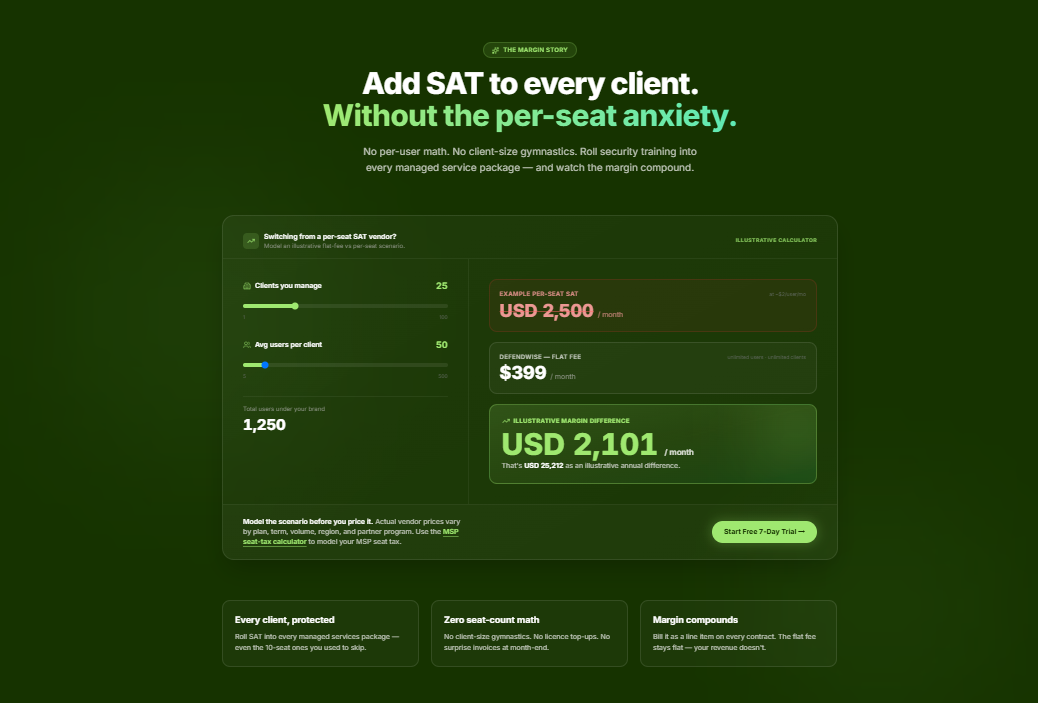
Many vendors offer per-user pricing, tiered plans, or bundles that combine training and phishing simulations. Per-user models can be straightforward, but confirm how pricing changes when user counts fluctuate throughout the contract. Tiered packaging often adds features like advanced reporting, additional simulation frequency, or custom messaging, so you should map each tier to the outcomes you want. If your clients have different maturity levels, choose a model that supports flexible scaling without forcing unnecessary add-ons for everyone.
Look for options that align to how you operate: MSP-managed dashboards, consistent configuration, and clear audit-ready exports. If AI-powered training is part of the offering, verify what it actually does—such as tailoring content based on observed click behavior or simulating realistic attack scenarios. Also confirm how white label delivery works in practice, including branding for emails and user portals. A pricing structure that supports repeatable onboarding and centralized oversight typically costs less to manage than solutions that require manual setup for each client.
Conclusion
Choosing the right program means focusing on measurable outcomes, operational fit, and transparent packaging. Use a benefits-first checklist to evaluate reporting quality, phishing coverage, user adoption support, and whether multi-client administration reduces your workload. When you compare proposals, treat the per-user price as only one input, and weigh it against the total value you can deliver across your client base. For MSPs seeking scalable security awareness training with fewer administrative headaches, DefendWise provides AI powered training, phishing awareness, white label delivery, and streamlined multi client management for security teams. That combination helps you deliver consistent results while keeping your service model clean and repeatable. If you want pricing that’s easier to justify and outcomes you can explain to clients, DefendWise is a strong starting point for evaluation.
